
Boosting a Post vs. Running a Real Ad Campaign — Why They're Not the Same Thing
That blue Boost button is the easiest money you'll ever spend on Facebook — and often the least measurable. Here's what boosting actually does, what a real campaign does differently, and when each one is the right call.
Facebook makes it almost too easy. A post does better than usual, and up pops a blue button offering to get it in front of more people for twenty dollars. You tap it, the reach number climbs, and it feels like you just ran an ad. You didn't — not really. And the gap between what boosting does and what an actual campaign does is where a lot of local marketing budgets quietly disappear.
What Boosting Actually Is
Boosting takes an existing post on your page and pays to show it to more people. That's the whole product. It was built to be simple, and it succeeds at that — a few taps, a budget, done.
What it optimizes for is the giveaway. By default, a boosted post chases engagement: likes, comments, shares. Meta's system goes looking for people likely to interact with the post, because that's the goal you handed it. Those are real people and that's real reach. It's just that "people who like posts" and "people who will call you about a $12,000 job" are not the same audience, and nothing in a boost is trying to find the second group.
What a Real Campaign Does Differently
A proper campaign is built in Meta's Ads Manager, and the first thing it asks is what outcome you actually want. Leads. Calls. Form submissions. Booked appointments. That choice changes everything downstream, because Meta will then hunt for people likely to do that — not people likely to tap a heart icon.
From there you get the controls boosting doesn't expose:
- Real targeting — service radius drawn to your actual coverage area, homeowners rather than renters, age and income filters that match your customer.
- Multiple ads tested against each other — different images, headlines, and offers running simultaneously so you learn what works instead of guessing.
- Where the click goes — a landing page or lead form built to capture contact details, rather than dumping people onto your Facebook page.
- Conversion tracking — the pixel firing on your site so you can see which ad produced which lead, and what it cost.
- Retargeting — showing follow-up ads to people who visited your site but didn't call, which is often the cheapest lead source you have.
The Measurement Problem
Here's the part that costs the most and gets noticed the least. When you boost a post, the numbers Facebook shows you are reach, likes, comments, shares. All real, all easy to read, and none of them tell you whether the money produced work.
Ask the question that actually matters — what did a lead cost, and how many turned into jobs — and a boosted post generally can't answer it. There's no conversion event being tracked, no cost-per-lead column, no way to connect a customer back to the spend that found them. You're left estimating from vibes: it felt busier that month, so it probably worked.
Pro tip: if you can't say what a lead cost you last month, you're not running ads — you're buying attention and hoping some of it converts.
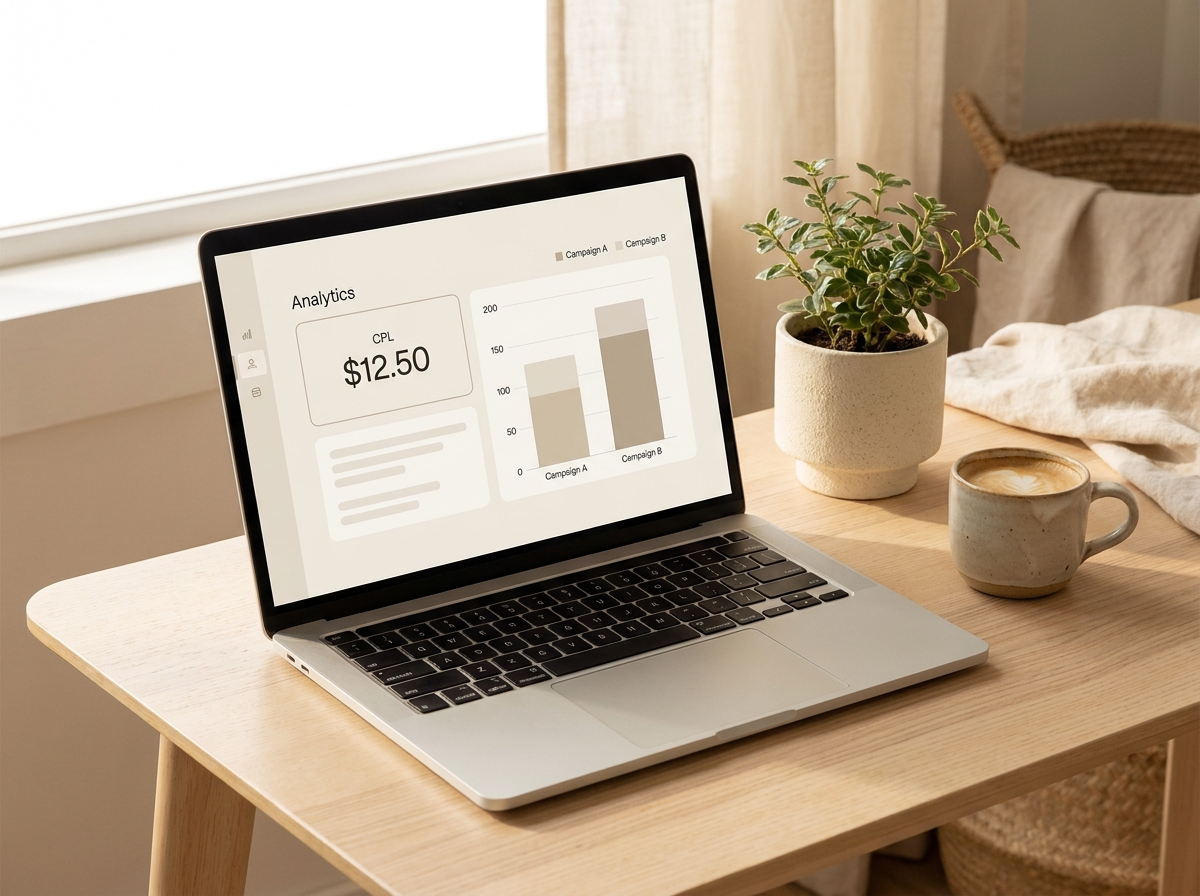
A campaign built properly reports cost per lead, cost per appointment, and which specific ad drove each one. That's the difference between spending and investing.
Is Boosting Ever Worth It?
Yes — and it's worth being straight about that rather than pretending it's useless.
Boosting is a reasonable tool for brand awareness in a tight local area. If you finished a job you're proud of and want more people in town to see the work, boosting that post for twenty or thirty dollars is a perfectly sensible thing to do. Same with an event, a seasonal announcement, or a piece of content you want to travel further than your follower count allows.
The trouble starts when boosting becomes the entire ad strategy — when the monthly marketing budget is a series of twenty-dollar boosts and the business is genuinely confused about why the phone isn't ringing more. Awareness has a place. It just isn't a lead generation system, and it was never built to be one.
What This Looks Like in Practice
Picture two flooring contractors, same town, both spending $1,000 a month.
The first boosts four posts at $250 apiece — photos of finished jobs. They reach maybe 30,000 people, collect a few hundred reactions and a handful of comments, two of which are people asking for a quote in the replies. Both get missed for a couple of days because nobody's watching Facebook comments closely.
The second runs a single campaign optimized for leads. Targeting is set to homeowners within a 25-mile radius, three different ad creatives are tested against each other, and clicks land on a page with a quote form that drops straight into a CRM with automatic follow-up. At a $55 cost per lead, that thousand dollars produces around 18 leads. At a 12% close rate, that's two jobs — and, crucially, they know exactly which ad produced them and what each one cost.
Same money. Same town. Completely different outcomes, and only one of those two businesses learned anything they can use next month.
The Honest Summary
Boosting isn't a scam and it isn't worthless. It's a simplified tool built for a simple job — getting a post seen by more people — and it does that job fine. The problem is that its simplicity makes it look like a substitute for something it isn't.
Key takeaway: boost a post when you want more people to see the post. Run a campaign when you want more people to book work. They are different tools for different jobs, and confusing them is expensive.
If you've been boosting for a while and can't confidently say what a lead costs you, that's not a sign you're bad at marketing — it's a sign you've been using the tool that doesn't measure that. The good news is the numbers are knowable, and once they are, every dollar after that gets easier to spend.